About
My name is Shahid and I'm an aerospace engineering student at MIT (some of you may know it as Course 16). I am interested in building the architecture for deep space missions in the future that will enable us to explore our solar system and use its resources.
Currently, I'm focused on a project on space robotics. Every single body plan that we know of came out of evolution on Earth, with conditions like gravity and an atmosphere. Machines mostly have inherited this from us as well. The problem is, outside of Earth, none of these conditions exist. As a result, nobody has a working intuition for what an optimized body should look like out there. My goal with this project was to place simplified machine parts in space and have them randomly interact with each other with varying distances from around a star to see how they would evolve.
Experience
Research Assistant · MIT AeroAstro
Used the F Prime framework to compile and run flight software on the RP2350 chip for satellite applications. Compared CNNs against algorithmic methods on an NVIDIA Jetson Nano for orbital event detection, under tight power and memory limits.
Projects
Space Robotics
A zero-gravity soup of engineering parts around a star, with no reward function. Panels harvest flux, everything costs energy, and bodies that run a surplus replicate by physically gathering nearby parts. Structure has to pay for itself.

Project Understudy
A segmented, suction-anchored snake that fits under a standard interior door, crosses, anchors to the floor, and opens the door. Software complete and print-ready at 241 g of PETG; no hardware built yet.

Hexapod
Eighteen actuated joints and 24 DOF at 9.30 kg, walking blind on its own sensors. Notable mostly for the three measurement routines that were quietly flattering the robot until adversarial review caught them.

4:1 Drone
A multirotor designed to lift four times its bodyweight, screened in closed form, searched with NSGA-II, and flown in real ArduPilot firmware. 4.62:1 in simulation, unbuilt, and carrying a correction that invalidated three of its own assumptions.

UFO Project
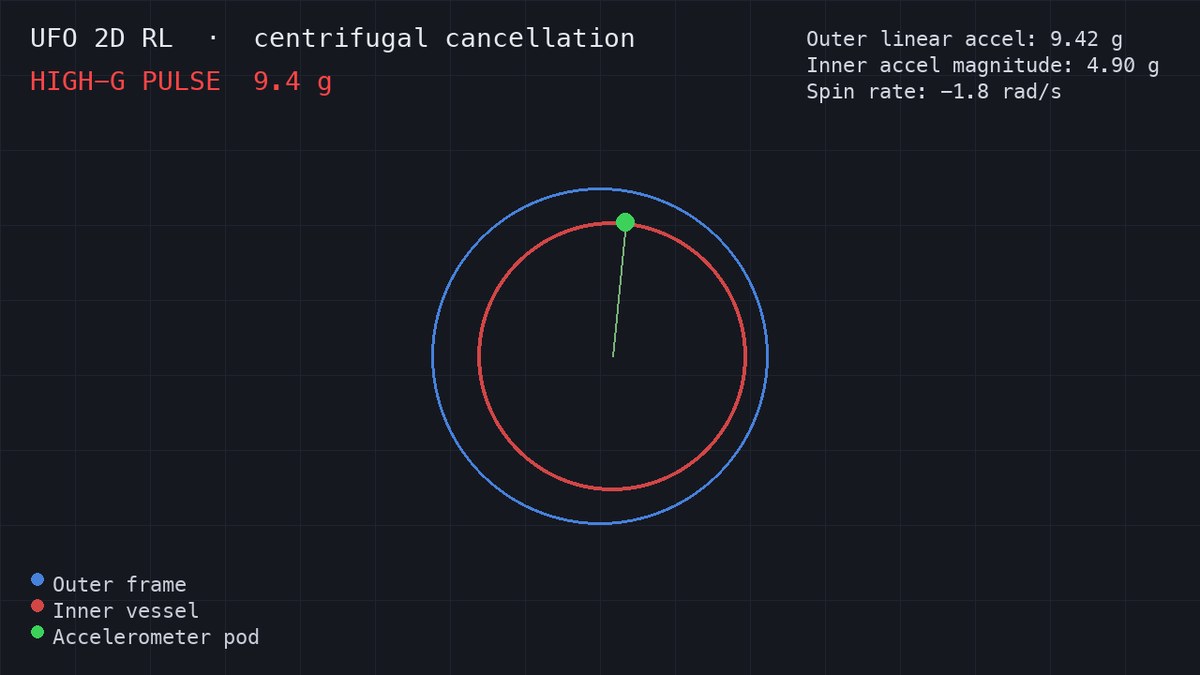
Building a centrifugal system that offsets linear acceleration with spin: a 2D RL policy torques an inner vessel during short ~5-10g outer pulses. Current demos still show multi-g on the inner pod mid-pulse; episode-mean inner load is lower because most of the run is quiet.
Deep Q-Network for Autonomous Lunar Landing
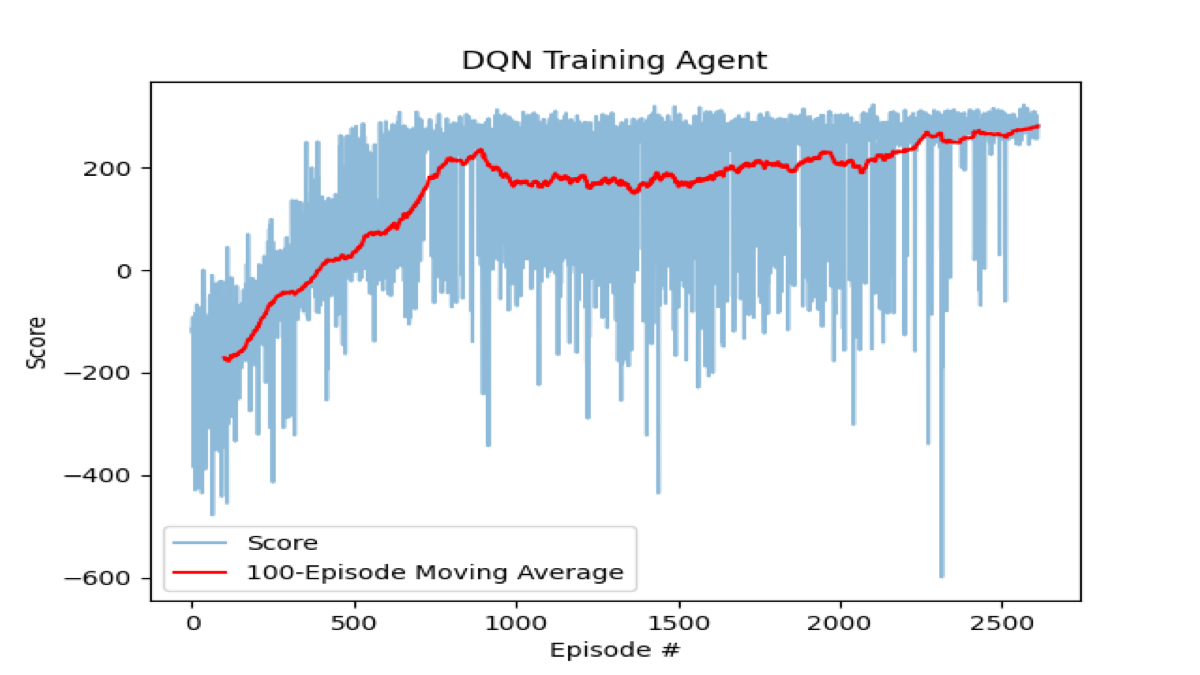
Engineered a PyTorch D3QN agent to solve a 2D landing environment with >95% success, then extended into a custom 3D rigid-body MuJoCo simulation with accurate 1.62 m/s² lunar gravity. Upgraded to DDPG for a 13-dimensional continuous state space with a hybrid PD-RL attitude controller mapping actions across 5 thrusters.
6-Axis Arm
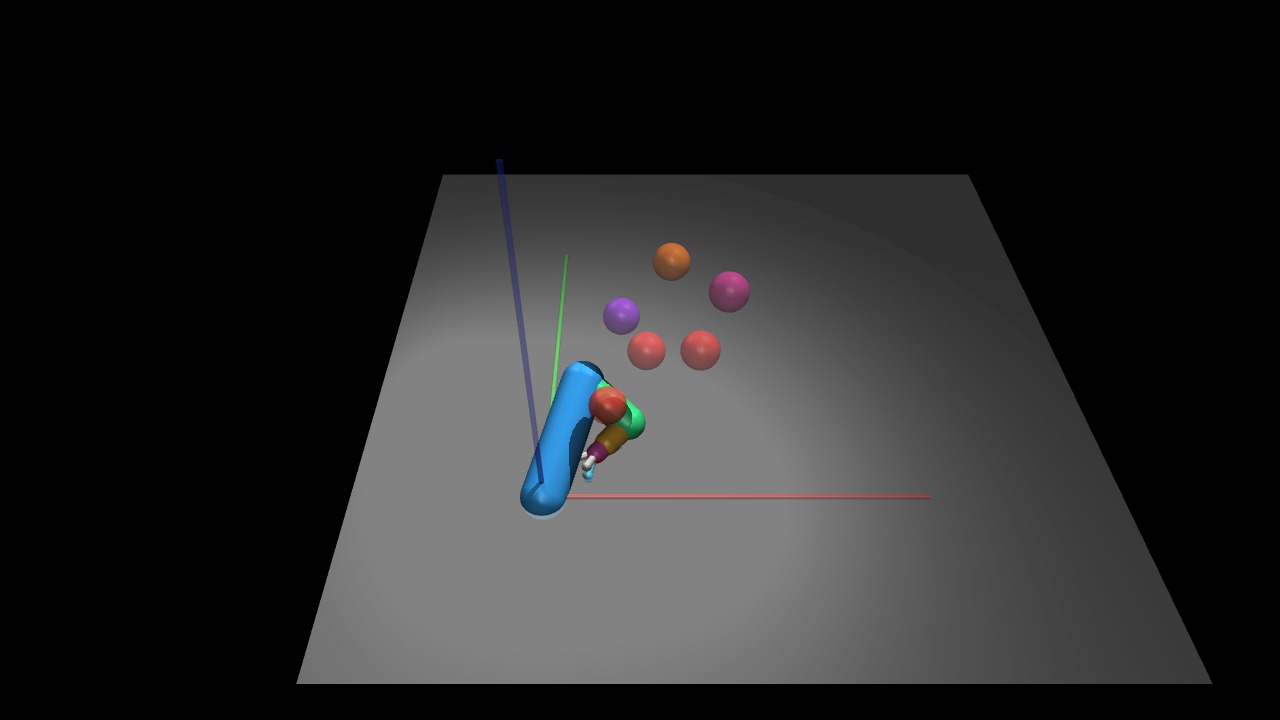
Adaptive inverse kinematics that keeps learning through hardware deformities using a Hebbian control policy, so everyday IK can tolerate looser (cheaper) mechanical tolerances instead of perfect calibration forever.
Project Erwin
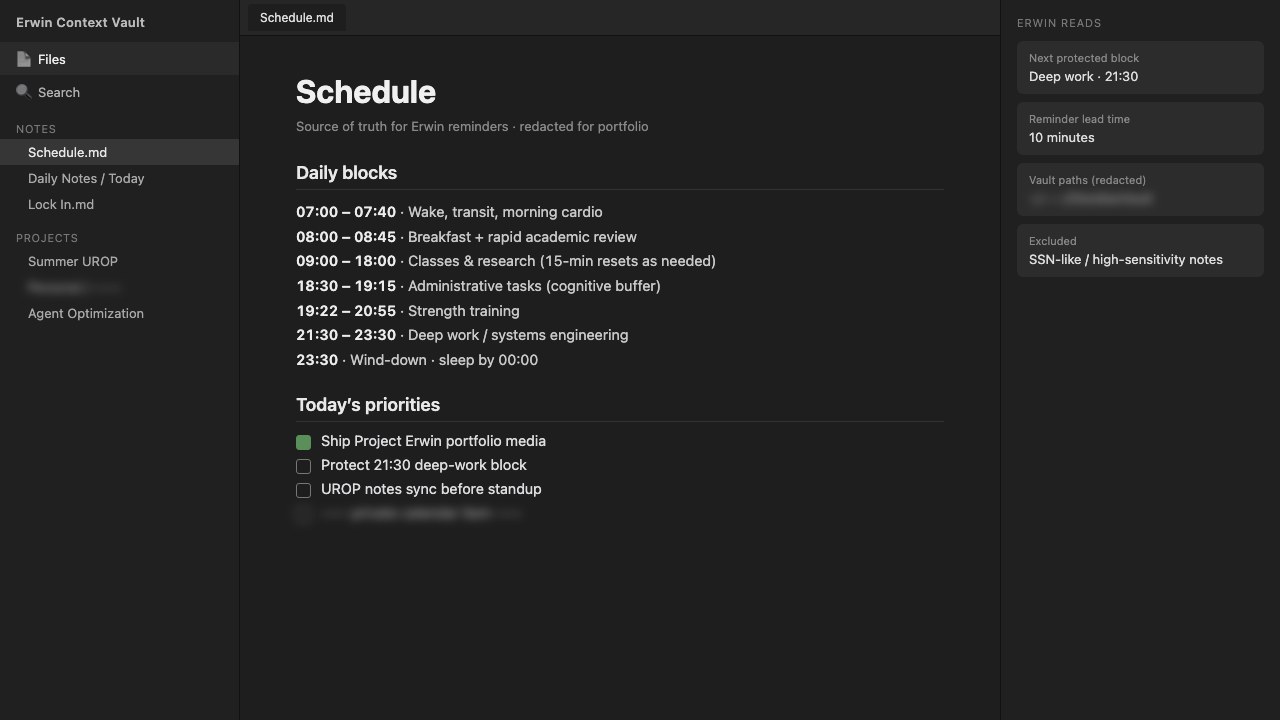
AI secretary that schedules, reminds, and commands from your Obsidian vault, speaking as Commander Erwin via ElevenLabs-trained weights deployed on Piper TTS.
Spike Detector
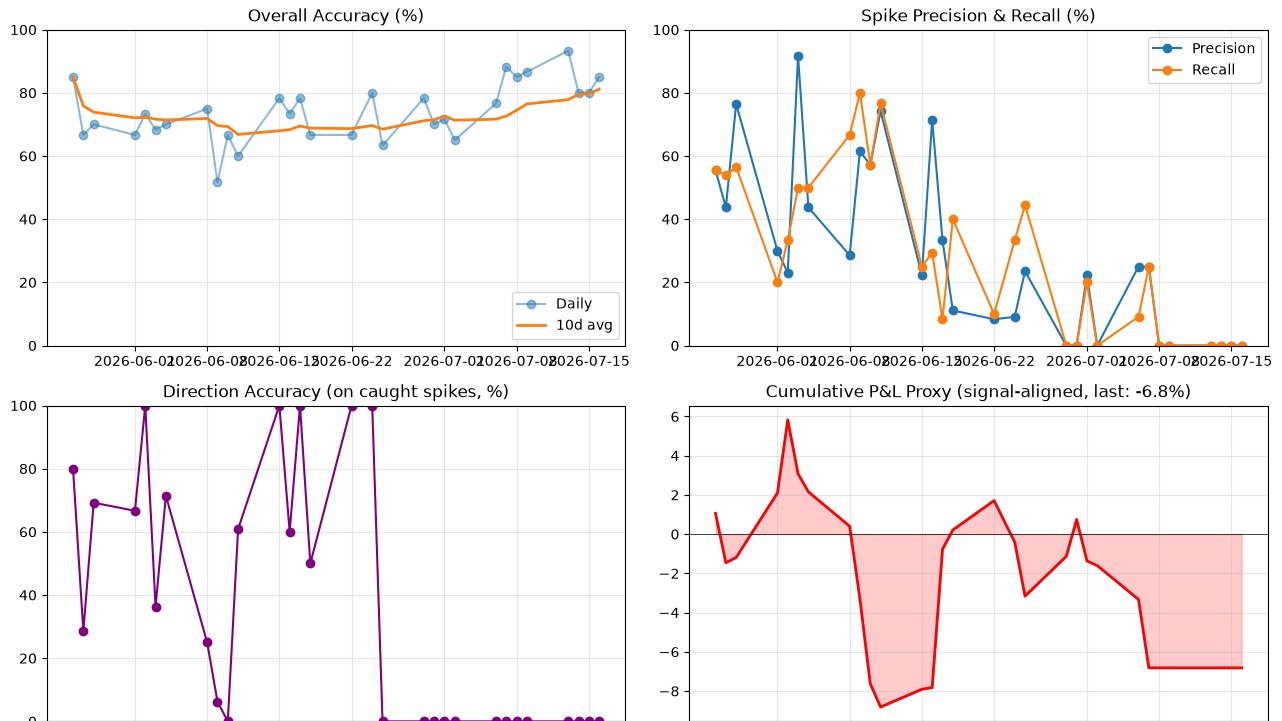
Pre-market binary classifier for significant intraday moves: two-stage XGBoost with FinBERT sentiment and a stat-mech layer, fully automated paper trading via Alpaca and Telegram.
Kalshi Optimization
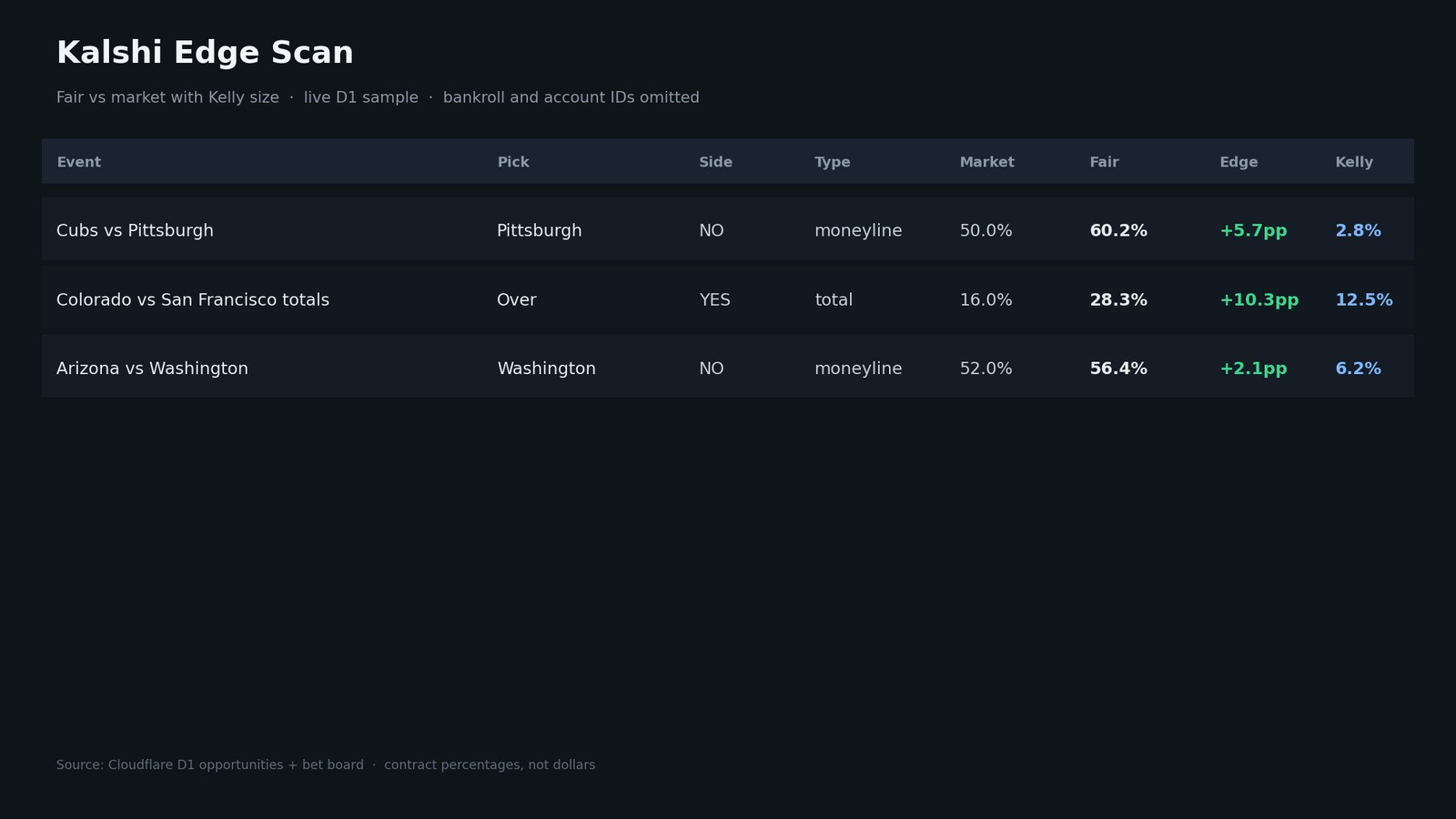
Autonomous sports-contract scanner that fuses Elo, bookmaker odds, and team stats into a fair-value model, then sizes edges with Kelly under statistical-mechanics risk dampers and Telegram alerts.
Community
RiseEd · Accessible STEM Learning
Built RiseEd to make STEM approachable for younger students, especially those from low-income backgrounds. Designed a website of simple, engaging lesson slides and booklets, iterating on feedback from teachers to turn intimidating topics into resources students and educators could actually use.
CoolBreeze · Low-Cost Air Conditioner
Designed and built a low-cost air conditioner grounded in thermodynamics principles, optimizing insulation and efficiency on a tight budget, then documented the full build in a video to make the science reproducible for anyone who wanted to follow along.
Education
Massachusetts Institute of Technology
Candidate for B.S. in Aerospace Engineering (Course 16).
Relevant Coursework: Introduction to Autonomy
Advanced Learning (Audit): Deep Learning (Graduate Level), Advances in Computer Vision (Graduate Level)
The Coding School
Completed two-semester courses in Artificial Intelligence and Quantum Computing, developing neural network, NLP, and reinforcement learning models for real-world applications. Implemented foundational quantum algorithms using the Cirq library.